The Metadata Effect: How Structured AI Tool Pages Are Earning 1,700+ Bing AI Citations in 2026
Generative Engine Optimization (GEO) is quickly becoming the new frontline of search visibility. While traditional SEO focuses on rankings and click-through rates, GEO measures something entirely different: how often AI assistants like Bing Copilot, ChatGPT, and Claude actually cite your content when answering a user's question.
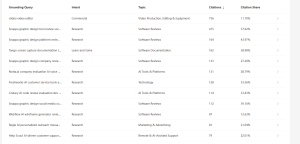
Over the past few months, we tracked how individual tool pages on a structured AI tools directory performed in Bing’s AI citation data. The results highlight a pattern that’s becoming hard to ignore.
📈 The Numbers
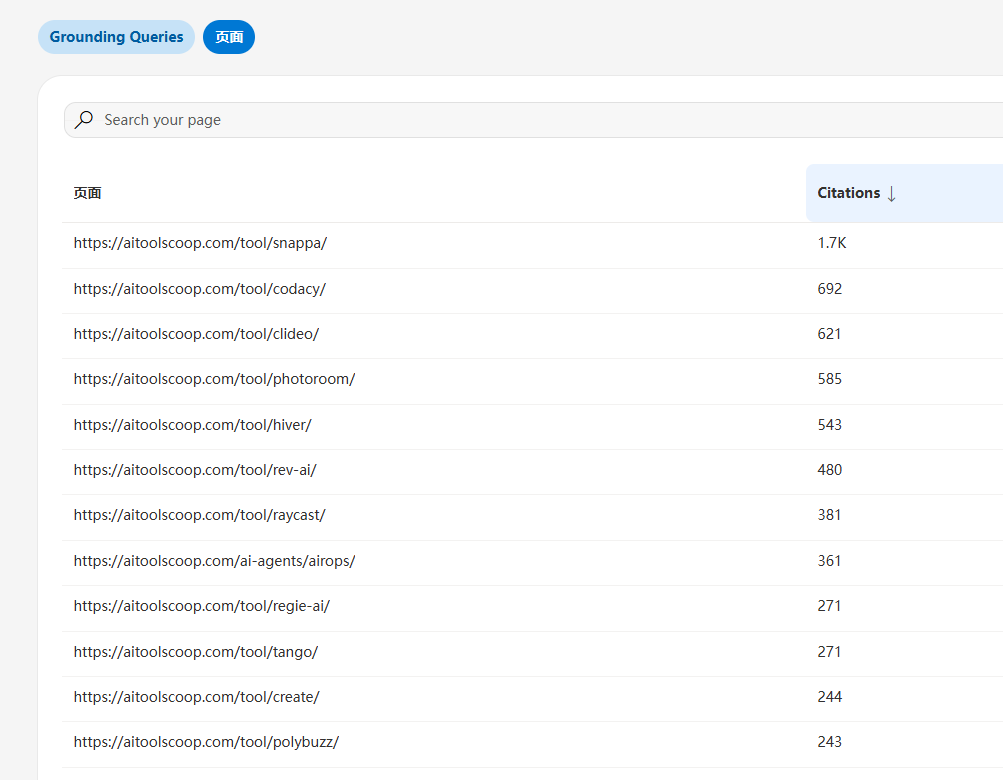
Here’s what the citation counts look like for a sample of tool pages over a recent reporting period:
| Tool / Product | Category / Type | Bing AI Citations |
| Snappa | Image & Graphic Editor | 1,700+ |
| Codacy | Automated Code Review | 692 |
| Clideo | Video Editing Tools | 621 |
| PhotoRoom | AI Photo Editing | 585 |
| Hiver | Gmail-based Help Desk | 543 |
| Rev.ai | Speech-to-Text API | 480 |
| Raycast | Mac Productivity Launcher | 381 |
| AirOps | AI Agent & Workflow Builder | 259 |
None of these pages are doing anything exotic. They’re standard directory listings — feature breakdowns, pricing tables, use cases, and short descriptions, all wrapped in consistent structured markup.
🧠 Why Structured Pages Get Cited More
The common thread across every page on this list isn’t backlinks or domain age — it’s format consistency and metadata clarity. A few engineering patterns stand out:
-
Predictable Structure: Each listing follows the same skeleton: what the tool does, who it’s for, key features, pricing tiers. AI crawlers don’t have to guess where information lives — they can extract it the same way every time.
-
Schema.org Markup: Structured data tells search and AI crawlers explicitly what a piece of content represents — a product, a price, a feature list — rather than leaving it to be inferred from raw text.
-
Self-Contained Answer Blocks: Short, focused sections that directly answer a question (“What does this tool cost?”, “What’s it best for?”) are easier for an AI model to lift and cite as a source, compared to long-form narrative content where the relevant fact is buried in a paragraph.
-
Freshness Signals: Pages that are updated regularly — even small edits — appear to get revisited and re-crawled more often, which keeps citation activity active rather than letting it decay over time.
🛠️ What This Means If You’re Building an AI Tool
If your product page reads like a traditional marketing pitch rather than a structured reference, you’re likely invisible to AI assistants — even if a human reviewer would find your product compelling.
💡 Key Takeaway: AI engines suffer from information overload. The easier you make it for their parsers to digest your data, the higher your chances of being quoted.
Here are a few practical takeaways for developers and founders:
-
Get listed where structure already exists: Directories that maintain consistent, schema-marked formatting across listings are easier for AI crawlers to trust and reuse, simply because the data pattern is already established.
-
Separate facts from fluff: Pricing, features, and use cases should be scannable as discrete data points, not buried inside narrative paragraphs.
-
Keep it current: Outdated pricing or feature lists don’t just hurt conversions — they reduce the likelihood of being cited as a reliable source going forward.
🎯 The Bigger Picture
What’s interesting about this data isn’t any single number — it’s the consistency. Eight different tools, eight different categories, all earning meaningful AI citation volume through the same structural approach. That suggests the pattern is reproducible, not accidental.
As more users turn to AI assistants instead of traditional search, the pages that win won’t necessarily be the ones with the flashiest copywriting — they’ll be the ones an AI model can read, trust, and quote without friction.