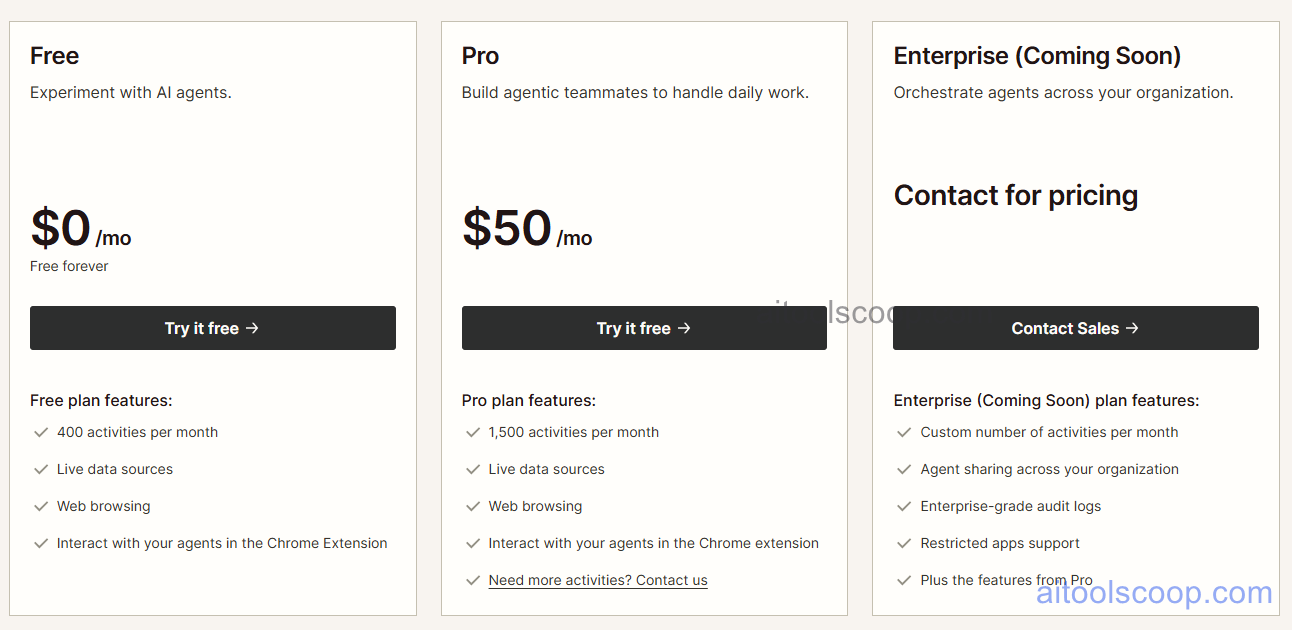
Zapier is the world's largest no-code automation platform with 7,000+ app integrations and 2.2 million businesses on the platform. In 2026, Zapier added AI agents that can reason, make decisions, and handle multi-step tasks autonomously — not just trigger-action chains. Free plan available. Professional from $50/month.
7,000+ pre-built app integrations — largest library in the industry
Zapier AI Agents — goal-driven reasoning agents using app actions as tools
Zapier Tables — built-in database for automation data storage
Zapier Interfaces — no-code front-end forms and dashboards
Multi-step Zaps with conditional logic, filters, and formatter steps
Paths — if/else branching inside a single automation
4.4
★★★★★
Agent Performance Score — based on 27 reviews
Autonomy
4.7
Task Completion
4.4
Integration
4.5
Reliability
4.3
Ease of Use
4.6
Pros & Cons
👍 Strengths
7,000+ integrations covers virtually every business app
AI Agents handle variable edge-case workflows that break traditional Zaps
15 years of reliability — the most battle-tested automation platform
Zapier Tables and Interfaces reduce need for third-party tools
2.2 million businesses on the platform — vast community and template library
👎 Limitations
Per-task pricing gets expensive at high volumes compared to n8n self-hosted
Free plan limited to 100 tasks/month and single-step only
No code execution — complex data transformation requires Formatter workarounds
Less powerful than n8n for technical teams who need custom logic
📖
About Zapier
Zapier (zapier.com) has been the default no-code automation tool since 2011. If you have ever connected two apps without touching code, there is a reasonable chance Zapier was involved. In 2026, Zapier made its most significant product evolution: AI Agents — automations that do not just follow a fixed trigger-action path but reason through tasks, handle exceptions, and make decisions based on context. The combination of 7,000+ app integrations built over 15 years with an AI reasoning layer on top is Zapier's strongest product position yet.
Zapier AI Agents vs Traditional Zaps
Traditional Zaps are deterministic: if X happens, do Y. They are powerful but brittle — if the input does not match the expected format, the Zap fails. Zapier AI Agents are different. Give the agent a goal and a set of tools (app actions it can take), and it figures out the sequence of steps required to achieve the goal based on the actual content it encounters. An agent handling customer support emails does not need a separate Zap for every possible email type — it reads the email, decides what action is appropriate, and executes it.
The practical result: Zapier Agents handle the long tail of edge cases that break traditional trigger-action automation. They are not a replacement for simple Zaps — a two-step "save Gmail attachment to Drive" workflow is still faster as a Zap. Agents are for the messy, variable workflows that previously required a human in the loop.
Key Features
7,000+ app integrations — the largest library of pre-built connections in the automation industry
Zapier AI Agents — goal-driven agents that reason through variable tasks using any combination of Zapier's app integrations as tools
Zapier Tables — built-in database for storing and querying automation data without a third-party database
Zapier Interfaces — build simple front-end forms and dashboards connected to Zaps without code
Multi-step Zaps — complex automation chains with conditional logic, filters, and formatter steps
Paths — if/else branching inside a single Zap based on field values or conditions
Team — monthly pricing — Shared workspace, unlimited team members, 50,000 tasks/month, advanced collaboration features. Visit zapier.com/pricing for current rate.
Pricing is subject to change. Always check the latest rates on the official website. For more AI tool reviews, visit aitoolscoop.com.
Affiliate Disclosure: This page contains affiliate links. If you click and make a purchase, we may earn a small commission at no extra cost to you. We only recommend tools we genuinely believe in.
🎯 Explore More
Discover other curated resources from our platform
 Freemium