
Albato (albato.com) is a no-code workflow automation platform that connects over 800 SaaS applications — from CRMs and marketing tools to e-commerce and communication platforms. It is designed as a practical, budget-conscious alternative to Zapier and Make, offering multi-step automations, data filters, and webhook support without requiring any technical background to get started.
How Albato Works
Albato operates on a trigger-action model. You select a trigger event in one app (for example, a new lead in HubSpot), define one or more actions in connected apps (send a Slack message, create a row in Google Sheets, add a contact in Mailchimp), and configure optional filters or data transformations in between. Automations run in the cloud and execute in near real-time. The visual builder requires no code and most integrations can be configured in under five minutes.
Key Features
- 800+ app integrations — covers CRMs, e-commerce, marketing, payments, communication, and productivity tools
- Multi-step workflows — chain unlimited actions with conditional logic and filters
- Built-in data transformation — format, map, and manipulate data between steps without external tools
- Webhook support — send and receive webhooks to connect apps not natively listed
- Embedded automation — white-label option for SaaS companies to offer automation to their own users
- Real-time execution — automations trigger and complete in seconds, not minutes
Albato Pricing
Source: albato.com/pricing, verified March 2026.
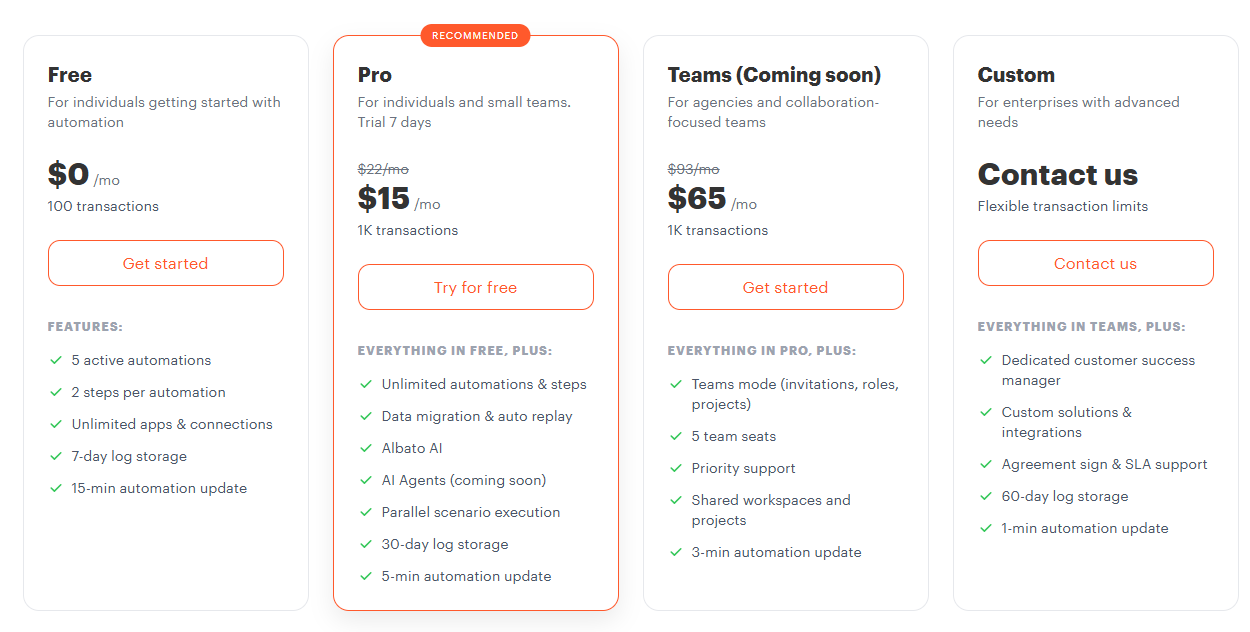
- Free — $0/month — Core automations, limited task runs. Suitable for evaluation and light personal use.
- Starter — $15/month — Increased task allowance, additional integrations, standard support.
- Pro — $65/month — Full feature access, higher task limits, priority support, and embedded automation capabilities.
Who Should Use Albato?
Albato is the right tool for small to mid-size businesses and solo operators who need reliable multi-app automation without paying Zapier prices. It is particularly well suited for e-commerce operators, marketing teams, and agencies managing repetitive data flows between CRMs, ad platforms, and communication tools. The white-label embedded option also makes it a strong choice for SaaS founders who want to offer native automation to their customers.